


Everyday People Coffee & Tea
Yemen Mocha Matari — Medium Dark Roast Single Origin


Description
The Coffee That Named Mocha
Before "mocha" meant a chocolate coffee drink, before it referred to a flavor, before it appeared on every café menu in the world — it was a place. Al-Makha: an ancient port city on the Red Sea coast of Yemen, through which virtually all of the world's coffee passed for two centuries. The traders who moved this coffee through Mocha gave it the name that has survived in our language ever since. And the most prized of all the coffees those traders handled — the one that buyers sought above everything else — came from the mountains of Bani Matari.
Yemen Mocha Matari is not a coffee with a story attached to it. It is the story. Grown on hand-built stone terraces in Yemen's western highlands, naturally processed using methods unchanged for over five centuries, tended by farming families who have worked this same land for generations — this is the coffee that the entire modern coffee world grew out of.
There is nothing quite like it.
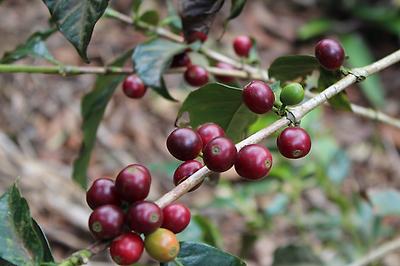
Details
Tasting Notes: Dark wild fruit · Bittersweet chocolate · Dried fig · Chai spice · Wine-like complexity · Long, evolving finish
Roast: Medium Dark
Process: Natural (dry-processed)
Altitude: 1,500–2,000 meters
Variety: Heirloom Yemeni (Dawairi, Jaadi, Ismaili, Tufahi)
Certification: 100% organically grown
District: Bani Matari, Western Highlands, Yemen
Best Brewed As: Pour-over, AeroPress, French press — always black
What Makes Matari Different
Yemen produces several distinct regional coffees — Haraazi, Sanani, and others — but Matari has always stood apart. The Bani Matari district in the mountains west of Sana'a sits at the highest altitudes of any Yemeni growing region, and that altitude combined with the district's specific soil composition and centuries of cultivated heirloom trees produces a cup profile unlike anything else in the Yemeni lineup.
Where other Yemeni coffees are fruity and bright, Matari is deep and complex — bittersweet, spiced, and layered with the kind of rustic character that specialty coffee buyers have described as the most distinctly Yemeni of all Yemeni origins. The flavor that has made "mocha" synonymous with richness and depth for 500 years is most pronounced here, in the district where it originated.
The cup shifts and evolves as it cools. Flavors that are deep and bittersweet when hot become sweeter, more fruit-forward, and more intricate at a lower temperature. Yemen Mocha Matari is best experienced slowly — brewed, then set aside for a few minutes before tasting. The patience is rewarded.

The Land: Ancient Terraces, Ancient Methods
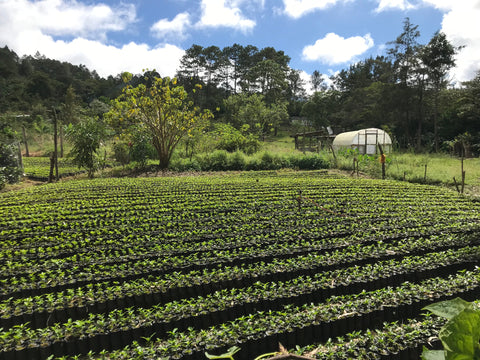
The farms of Bani Matari are carved into the sides of steep mountain valleys at elevations between 1,500 and 2,000 meters above sea level — among the highest coffee-growing altitudes in the world. The stone terraces that cover these slopes were built entirely by hand, without machinery, over centuries of patient agricultural work. They are both a farming infrastructure and a piece of cultural heritage as significant as any monument.
The climate of the Bani Matari highlands is defined by conditions that most growing regions cannot replicate: intense highland sun during the day, cool nights that slow cherry development and concentrate flavor, and severely limited rainfall that forces the coffee plant to develop deep root systems and produce cherries with extraordinary intensity. Scarcity, in the language of coffee terroir, produces complexity.
The soil is ancient and mineral-dense, shaped by millennia of highland weathering in some of the driest, most geologically distinctive terrain on earth. Generations of cultivation without chemical inputs have preserved its natural character. These are 100% organically grown coffees — not by design, but by tradition. Synthetic fertilizers and pesticides have never been introduced to these farms.
The Farmers and the Exporter
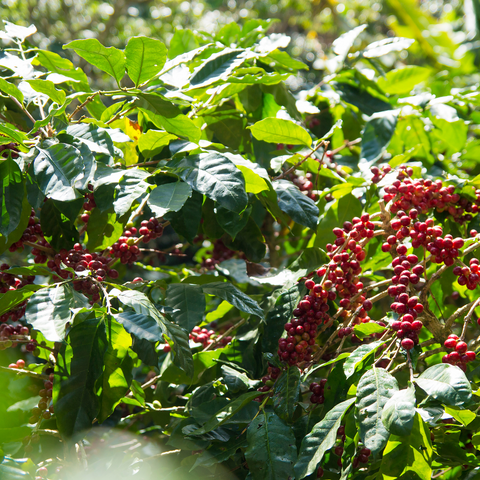
Coffee cultivation in Bani Matari is carried out by approximately 98 smallholder farming families, each managing plots on the ancient terraced hillsides that have been in continuous cultivation for generations. The knowledge of when to irrigate, when to harvest, and how to process is carried orally from parent to child — agricultural expertise accumulated over centuries with no written manual.
This lot is exported through Pearl of Tehama for Import and Export, led by Fatoum Muslot — a woman who took over the family coffee business started by her father in the 1950s. Under her leadership, Pearl of Tehama has implemented stricter hand-sorting standards and improved storage practices, including Ecotact storage liners that protect the coffee's quality through the export process. That care is visible in the cup.
Yemen consumes the vast majority of its own coffee domestically — roughly three quarters of production never reaches the international market, and the largest share of what does export goes to neighboring Saudi Arabia. What reaches specialty buyers globally is a genuinely small and genuinely rare supply. When you purchase Yemen Mocha Matari, you are buying one of the most limited coffees in the specialty trade.

The Processing: Five Centuries Unchanged
Yemen Mocha Matari is naturally processed — dry-processed — exactly as it has been in this region for over five hundred years. After careful, selective hand-harvesting of only fully ripe cherries, the whole fruit is laid out in a single layer on raised drying beds or clean rooftop surfaces and left to dry in the highland sun. Farmers turn the cherries by hand throughout the drying period to ensure even exposure across the entire batch.
The process takes four to six weeks. During that time, the sugars and aromatic compounds in the drying fruit slowly migrate into the bean beneath — imparting the wild, fruit-forward, wine-like complexity that defines natural-processed Yemeni coffee. No washing. No pulping. No machinery. Just sun, time, and the hands of farmers who have done this their entire lives.
The result is a bean that carries the full character of the fruit it grew inside — concentrated, layered, and deeply expressive of the land where it was grown.
In the Cup: How to Taste It
Yemen Mocha Matari rewards a specific approach. A few recommendations for getting the most from it:
Brew temperature: Use water at 90–92°C rather than the typical 93–95°C. The more delicate aromatic compounds in natural-processed Yemeni coffee extract cleanly at slightly lower temperatures and can become harsh at higher ones.
Rest after roasting: Like all natural-processed coffees, Matari benefits from resting at least 72 hours after the roast date before brewing. The flavors open up and integrate significantly with a few days of rest.
Drink it black. Milk and cream obscure the very complexity you're paying for. This coffee is meant to be experienced on its own terms.
Let it cool. Pour your cup and wait two to three minutes before tasting. The flavors that emerge as the temperature drops from hot to warm are some of the most interesting the coffee has to offer — the bittersweet chocolate becomes sweeter, the spice notes clarify, and the dried fruit character deepens.
Pour-over is the preferred method. A Hario V60 or Kalita Wave produces the cleanest, most transparent expression of the flavor profile. French press adds body at the expense of some clarity. AeroPress at lower temperature and shorter brew time is excellent for a more concentrated, espresso-adjacent cup.
A Note on Availability
Yemen Mocha Matari is among the rarest coffees in the international specialty trade. Yemen's political situation, limited export infrastructure, and the small scale of production in Bani Matari create genuine supply constraints. When this coffee is available, we carry it. When supply is interrupted between harvests or due to logistics challenges, we do not substitute another coffee in its place. If you see it in our store, it is worth buying without delay.
Brewing Recommendations
French Press
Ratio: 1:13 (35g coffee : 455g water)
Grind: Medium-coarse
Time: 4:00–4:30 minutes
Temp: 195–200°F
The best method for Matari's full body — amplifies dark chocolate, dried fruit, and earthy wine-like depth
Pour Over (V60/Chemex)
Ratio: 1:15 (27g coffee : 405g water)
Grind: Medium
Time: 3:30–4:00 minutes
Temp: 195–200°F
Highlights Matari's wild fruit complexity and cocoa aromatics with a clean, defined finish
Drip Coffee
Ratio: 1:16 (30g coffee : 480g water)
Grind: Medium
Time: Per machine cycle
Temp: 195–200°F
Everyday brewing that delivers Matari's signature chocolate and dried stone fruit in every cup
Moka Pot
Dose: Fill basket level (15–17g)
Water: Fill to valve line
Time: 4:00–5:00 minutes
Temp: Low-medium heat
Produces an intensely rich, espresso-style brew that concentrates Matari's bold chocolate and spice
Yemen Mocha Matari Brewing Tips
- Use filtered water at 195–200°F — slightly cooler than other origins to avoid over-extracting Matari's natural fruit sugars
- Natural (dry) processing gives this coffee its characteristic wine and dried fruit complexity — don't grind too fine or it can turn tannic
- Allow a generous 30–45 second bloom when brewing pour over; the natural process produces significant off-gassing
- Grind fresh before each brew — Matari's volatile aromatics (dark chocolate, fig, tamarind) fade quickly once ground
- French press and moka pot are ideal when you want maximum body and spice; pour over when you want clarity and fruit distinction
- This coffee is exceptional black — the complex fruit and chocolate notes need no additions to shine
- Consume within 2–4 weeks of roast date; store whole beans in an airtight container away from heat and light
Frequently Asked Questions
Yemen consumes approximately three quarters of its own coffee production domestically. Of the quarter that reaches the export market, the majority goes to neighboring Saudi Arabia. What remains for the global specialty trade is genuinely limited — made more so by Yemen's ongoing political and logistical challenges. Authentic Yemeni Mocha Matari is one of the most constrained supplies in specialty coffee.
Mocha refers to the ancient Yemeni port city of Al-Makha, through which Yemen's coffee was exported to the world for centuries. It has nothing to do with chocolate flavoring. The word "mocha" as it appears on coffee menus today is a cultural remnant of Yemen's historical dominance of the global coffee trade — the rich, chocolatey character of Yemeni coffee is what originally connected the two words in the popular imagination.
Yemen Mocha Matari is the most complex and historically significant single origin we carry. It is wilder, deeper, and more demanding than our Ethiopia Natural, Guatemala, or Honduras — all of which are excellent, approachable coffees. Matari is for the drinker who has explored those origins and wants something that operates in an entirely different register.
Yes — whole bean or ground, selected at checkout. For the fullest expression of Matari's flavor complexity, whole bean ground immediately before brewing is strongly recommended. The aromatic compounds that define this coffee dissipate faster after grinding than most origins.