


Everyday People Coffee & Tea
Komodo Dragon Coffee — Medium Roast Single Origin


Description
The Coffee From the Dragon's Island
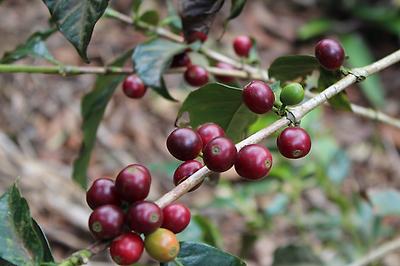
Flores is not Bali, and it is not Sumatra — it's a smaller, wilder island in Indonesia's Lesser Sunda chain, best known as the home of Komodo National Park and the world's largest living lizard. Just inland from the park's volcanic coastline, the island's central highlands rise into cool, cloud-wrapped mountains where coffee has grown since Dutch colonists first planted it in the early 20th century. This is Komodo Dragon Coffee: grown by smallholder farmers in the shadow of the same volcanoes that give the Komodo dragon its rugged, ancient habitat, and processed using a method almost unique to Indonesia.
It's a coffee built for people who want something different from the bright, fruity single origins that dominate the specialty world — heavy-bodied, low in acid, and deeply, syrupy sweet.
There is nothing quite like it.
Details
Tasting Notes: Dark chocolate · Toasted tobacco · Cedar · Brown sugar · Low acidity · Full, syrupy body
Roast: Medium
Process: Wet-hulled (Giling Basah)
Altitude: 1,200–1,800 meters
Region: Manggarai & Bajawa (Ngada) highlands, Flores, East Nusa Tenggara
Variety: Typica, Catimor, Kartika, Timor Hybrid
Best Brewed As: French press, moka pot, drip — holds up well with milk
What Makes Komodo Dragon Different
Most Indonesian coffee comes from Sumatra, and most people who know Indonesian coffee only know Sumatra Mandheling. Flores is a different island entirely — smaller, less developed, and largely overlooked by the global specialty trade despite highlands that rival Sumatra's in altitude and volcanic richness. The island takes its identity from Komodo National Park, established in 1980 to protect the Komodo dragon, and the coffee grown a short distance inland carries something of that same untamed character.
Where a washed coffee from Central America might taste clean and bright, Komodo Dragon is the opposite: heavy, low-acid, and layered with notes of dark chocolate, cedar, and toasted tobacco that come almost entirely from the way it's processed. It's a coffee that rewards drinkers who want body and depth over acidity and brightness — closer in spirit to a Sumatra than to anything from East Africa or Central America.

The Land: Volcanic Highlands Beside the Dragon's Home
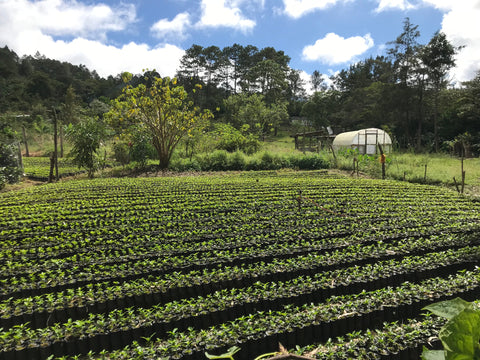
Flores' coffee-growing regions — centered on Manggarai in the west and Bajawa (in the Ngada regency) further east — sit at elevations between 1,200 and 1,800 meters, cooled by highland air and fed by volcanic soil from peaks like Inerie and Ebulobo. Farms here are almost entirely smallholder plots, often just a hectare or two, worked by families who grow coffee alongside food crops rather than as a single commercial crop.
Flores has never had the marketing presence of Sumatra or Java, and its infrastructure for processing and export has historically lagged behind better-known Indonesian origins. That's part of why this coffee remains a genuine find rather than a supermarket staple — production is real, but small, and much of it moves through regional traders before it ever reaches an international buyer.
The Farmers
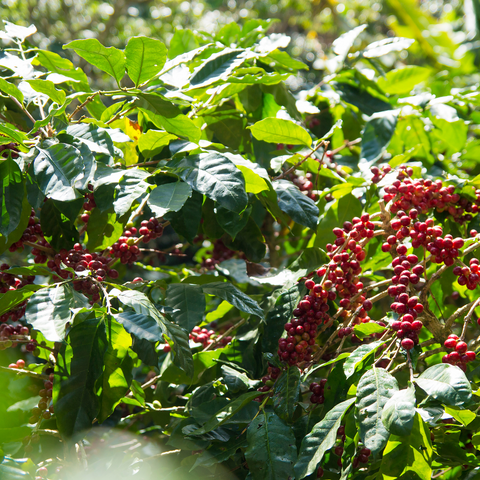
Coffee in the Manggarai and Bajawa highlands is grown by smallholder farmers from the Manggarai and Ngada ethnic groups, most working family-owned plots passed down across generations. Many still grow coffee under a canopy of shade trees, a traditional practice that protects the soil and supports the surrounding forest rather than clearing it. Farming here is organized around family and community rather than estate-style production — there is no single plantation behind this coffee, only many small hands doing the same careful work their parents and grandparents did.

The Processing: Wet-Hulling, an Indonesian Signature
Komodo Dragon Coffee is processed using Giling Basah — wet-hulling — a method found almost nowhere else in the coffee-growing world outside Indonesia. After picking, the ripe cherries are pulped and given only a short, partial fermentation before the parchment-covered beans are hulled while still damp, rather than fully dried first. The naked beans then finish drying in the open air.
This unconventional order — hulling before the bean is fully dry — is what gives wet-hulled Indonesian coffees their signature: a heavier, syrupy body, muted acidity, and earthy, herbal undertones that washed or natural coffees simply don't produce. It's a technique born of necessity, developed by farmers in a humid climate without reliable access to large drying facilities, and it has become one of Indonesia's defining contributions to world coffee.
In the Cup: How to Taste It
Komodo Dragon rewards a different approach than a bright, delicate single origin:
Brew hot. Use water at the standard 195–205°F range — this coffee doesn't need the gentler treatment a natural-processed origin does.
Let the body lead. This is a coffee about weight and depth, not clarity. Full-immersion methods (French press, moka pot) show it at its best.
It holds up with milk. Unlike a delicate floral origin, Komodo Dragon's chocolate and tobacco notes come through even in a latte or with cream — a rarity among single origins.
Don't over-grind. A slightly coarser grind than you'd use for a bright origin helps avoid over-extracting the wet-hulled coffee's earthier notes into bitterness.
Brewing Recommendations
French Press
Ratio: 1:14 (32g coffee : 450g water)
Grind: Medium-coarse
Time: 4:00 minutes
Temp: 200°F
The best method for showing off Komodo Dragon's full body — amplifies dark chocolate, cedar, and toasted tobacco depth
Pour Over (V60/Chemex)
Ratio: 1:15 (27g coffee : 405g water)
Grind: Medium
Time: 3:00–3:30 minutes
Temp: 200°F
A cleaner take on Komodo Dragon — still full-bodied, with more clarity on the brown sugar sweetness
Drip Coffee
Ratio: 1:16 (30g coffee : 480g water)
Grind: Medium
Time: Per machine cycle
Temp: 200°F
An easy everyday cup that still carries the low-acid, chocolatey character this origin is known for
Moka Pot
Dose: Fill basket level (15–17g)
Water: Fill to valve line
Time: 4:00–5:00 minutes
Temp: Medium heat
Concentrates Komodo Dragon's cedar and tobacco notes into a rich, espresso-style shot
Komodo Dragon Brewing Tips
- Use filtered water at 195–205°F — this coffee can handle a hotter brew than delicate natural-processed origins
- Wet-hulled processing gives this coffee its low acidity and heavy body — don't over-brew or it can turn muddy
- Great as a base for milk drinks; the chocolate and tobacco notes don't get lost the way a floral origin's would
- Grind just before brewing for the fullest chocolate and cedar aromatics
- Store whole beans in an airtight container away from heat and light; best within 3–4 weeks of roast date
Frequently Asked Questions
It's named for its origin near Komodo National Park on the island of Flores, Indonesia — home of the Komodo dragon, the world's largest living lizard. The coffee itself grows in the island's central volcanic highlands, a distance inland from the park.
Wet-hulling (Giling Basah) is a processing method used almost exclusively in Indonesia, where the parchment is removed from the bean while it's still damp rather than after full drying. It's what gives Indonesian coffees like this one their heavier body and lower acidity compared to washed or natural coffees from other parts of the world.
Komodo Dragon is the coffee to reach for if you want body and depth over acidity and fruit — a very different profile from something like our Ethiopia Natural or Yemen Mocha Matari. It's closer in character to a Sumatra, and it holds up especially well with milk.
Yes — whole bean or ground, selected at checkout. For the fullest expression of Matari's flavor complexity, whole bean ground immediately before brewing is strongly recommended. The aromatic compounds that define this coffee dissipate faster after grinding than most origins.