


Everyday People Coffee & Tea
Haiti Blue Coffee — Medium Roast Single Origin


Description
The Caribbean’s Best-Kept Secret
Long before Jamaica Blue Mountain became the Caribbean coffee everyone knew by name, Haiti was the coffee capital of the world. In the late 1700s, the island supplied roughly half of all the coffee consumed on earth. Its mountain farms set the standard that the rest of the Caribbean would later follow.
Haiti Blue is a return to that legacy. It’s grown in the shade of Haiti’s blue pine forest from the same heirloom Typica varietal that made Jamaica Blue Mountain famous. That kind of forest cover is now rare in Haiti, which makes this coffee a rare thing too. It’s tended by a cooperative of smallholder farmers in the Central Plateau and roasted to a medium that brings out everything the bean has to offer.
It’s smooth, low in acid, and remarkably balanced. It’s the kind of coffee you reach for every morning without ever getting tired of it.
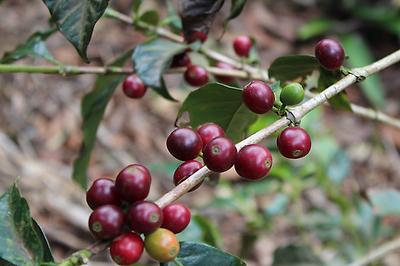
Details
Tasting Notes: Roasted almond · Buttery mouthfeel · Creamy body · Sweet, smooth finish
Roast: Medium
Acidity: Low
Body: Medium, creamy
Variety: Typica (the same varietal as Jamaica Blue Mountain)
Growing Method: Shade-grown under blue pine forest canopy
Region: Central Plateau, Haiti
Certification: Fair Trade
Best Brewed As: Drip, pour-over, French press. Excellent black or with cream.
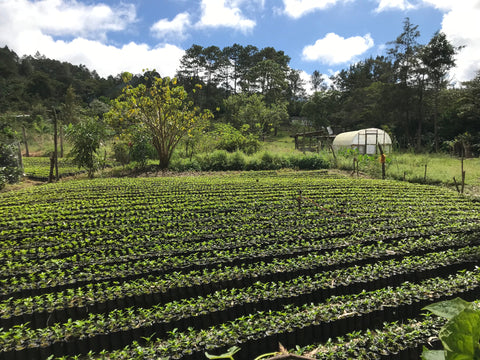
What Makes Haiti Blue Different
Most Caribbean coffees that share Jamaica Blue Mountain’s pedigree come with Jamaica Blue Mountain’s price tag. Haiti Blue offers the same Typica lineage, the same mountain-island terroir, and the same signature smoothness in a cup that’s every bit as refined.
The difference starts with the shade. Coffee grown beneath a forest canopy ripens more slowly than sun-grown coffee. The cherries spend more time on the branch, building sugars and developing the rounded, mellow character that defines this cup. The result is a coffee with almost no sharp edges. The acidity is gentle, the body is creamy, and the finish is sweet and clean.
If you’ve ever wanted a coffee that’s easy on the stomach without sacrificing flavor, this is it. Haiti Blue’s naturally low acidity makes it one of the most approachable single origins we carry.

The Land: Haiti’s Blue Pine Forest
Haiti’s Central Plateau is mountainous, fertile country. The coffee grows beneath a forest of native pines, whose canopy filters the intense Caribbean sun and keeps the soil cool and moist. Fallen needles and leaf litter return nutrients to the ground season after season, building rich, living soil that supports the coffee trees naturally.
Forest cover like this has become increasingly rare across Haiti, which makes shade-grown coffee from this region both an agricultural treasure and an environmental one. Farming coffee under the canopy gives families a reason to protect the trees rather than clear them. Every bag supports a farming model that keeps the forest standing.
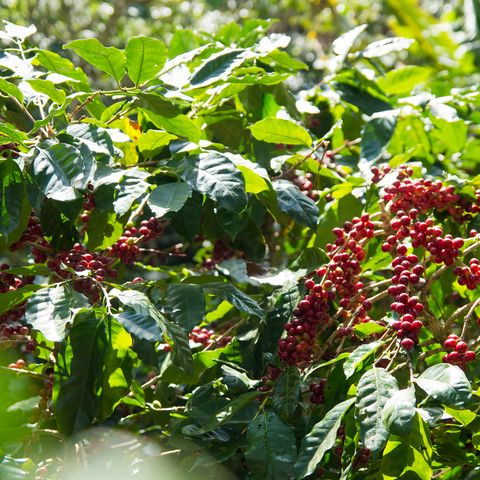
The Farmers: Good Coffee, Good Cause
Haiti Blue is grown by a cooperative of roughly 680 smallholder farmers in the Central Plateau. These are families working small plots, harvesting by hand, and carrying forward coffee-growing knowledge that has deep roots on the island.
What sets this cooperative apart is how its farmers are paid. They earn wages roughly three times the Fair Trade minimum. That isn’t charity; it’s a premium earned by producing exceptional coffee. It’s a model built on the idea that quality and fair pay go hand in hand. When the coffee is excellent, the farmers who grew it should be rewarded for it.
That philosophy sits close to our own. Every bag of Everyday People coffee gives back, and Haiti Blue carries that mission all the way back to the farm.

In the Cup: How to Taste It
Haiti Blue is an easygoing coffee, but a few tips will help you get the most from it.
Start black. Your first sip should be without additions. That’s how you’ll notice the roasted almond sweetness and the buttery texture that make this coffee special.
Then try it with cream. Unlike more delicate origins, Haiti Blue holds up beautifully to a splash of milk or cream. Its nutty sweetness becomes rounder and almost dessert-like.
Notice the texture. Pay attention to how the coffee feels as much as how it tastes. The creamy, buttery mouthfeel is one of Haiti Blue’s signatures.
Let it cool a little. As the cup drops from hot to warm, the sweetness comes forward and the finish gets even smoother.
Use it as your daily driver. Haiti Blue’s balance and low acidity make it an ideal everyday coffee, equally good in a drip machine on a busy morning or a slow pour-over on the weekend.
A Note on Availability
Shade-grown Haitian coffee is produced in small quantities, and supply can vary from harvest to harvest. When Haiti Blue is in stock, it’s a chance to enjoy a rare Caribbean single origin with a story worth sharing. If you see it in our store, don’t wait.
Brewing Recommendations
French Press
Ratio: 1:15 (30g coffee : 450g water)
Grind: Coarse
Time: 4:00 minutes
Temp: 200°F
Amplifies Haiti Blue's creamy, buttery body and brings the roasted almond notes front and center
Pour Over (V60/Chemex)
Ratio: 1:16 (25g coffee : 400g water)
Grind: Medium
Time: 3:00–3:30 minutes
Temp: 200°F
A clean, balanced cup that highlights Haiti Blue's sweet nuttiness and smooth, mellow finish
Drip Coffee
Ratio: 1:16 (30g coffee : 480g water)
Grind: Medium
Time: Per machine cycle
Temp: 200°F
The ideal everyday method — consistent, smooth, and low in acid from the first cup to the last
Moka Pot
Dose: Fill basket level (15–17g)
Water: Fill to valve line
Time: 4:00–5:00 minutes
Temp: Medium heat
Produces a rich, espresso-style brew with toasted almond depth — an excellent base for lattes
Haiti Blue Brewing Tips
- Use filtered water at 195–205°F — Haiti Blue's medium roast extracts evenly across this full range
- Its naturally low acidity makes it forgiving, so it's a great choice if you're still dialing in your brew method
- Allow a 30-second bloom when brewing pour over to release trapped CO₂ for a more even extraction
- Pairs beautifully with milk and cream — the almond sweetness turns rounder and almost dessert-like in a latte or café au lait
- Grind just before brewing to preserve the delicate roasted almond aromatics
- Store whole beans in an airtight container away from heat and light; best within 2–4 weeks of roast date
Frequently Asked Questions
No, but they’re close relatives. Haiti Blue is grown from Typica, the same heirloom varietal used in Jamaica Blue Mountain, and both come from mountainous Caribbean islands. Jamaica Blue Mountain is a protected designation that can only come from a specific region of Jamaica. Haiti Blue is its own distinct origin, with a similarly smooth, mellow profile and its own sweet, nutty character.
Yes. Shade growing, the Typica varietal, and a medium roast combine to give Haiti Blue naturally low acidity. It’s a great choice for coffee drinkers who find brighter coffees harsh on the stomach.
Expect a smooth, creamy cup with roasted almond sweetness, a buttery mouthfeel, and a sweet, clean finish. It’s balanced and mellow, with no sharp or bitter edges.
Haiti Blue is one of the smoothest, most approachable coffees we carry. If you enjoy the mellow sweetness of our Hawaiian Kona Blend , you’ll feel right at home with Haiti Blue. Drinkers who want something brighter and fruit-forward should try our Ethiopia Natural.