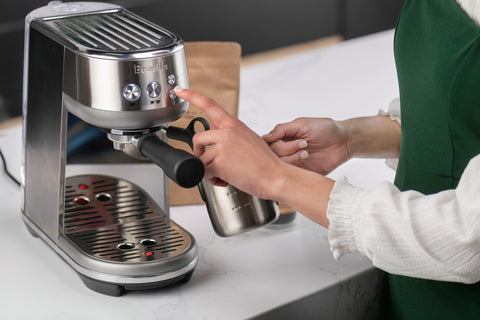
Choosing your first espresso machine can feel overwhelming. With hundreds of models ranging from $200 to $5,000+, each promising café-quality espresso at home, how do you know which one is right for you?
After helping thousands of home baristas find their perfect machine, I've created this comprehensive guide to simplify your decision. Whether you're a complete beginner or upgrading from a basic setup, you'll learn exactly what to look for and which machine matches your needs and budget.
Understanding Your Espresso Journey: Where Are You Starting?
Before diving into machine types and features, let's identify where you are in your coffee journey. This helps narrow down which machines make sense for you.
The Complete Beginner
You've been buying lattes at cafés and want to make them at home. You've never pulled an espresso shot before and aren't sure about the technical aspects. You want good coffee without a steep learning curve.
What you need: A machine that's forgiving, has clear instructions, and produces consistent results from day one. Budget-friendly options that don't compromise too much on quality.
Budget range: $300-$800
The Enthusiast
You've done your research, watched YouTube videos about extraction and pressure profiling, and you're excited to learn the craft. You're willing to invest time practicing and don't mind some trial and error.
What you need: A machine with manual control, room to grow your skills, and the ability to experiment with different techniques. Quality construction that will last as you improve.
Budget range: $800-$2,000
The Upgrader
You've been using a basic machine or a Nespresso and want something significantly better. You know what good espresso tastes like and want café-quality results at home.
What you need: Professional-grade features, temperature stability, strong steaming power, and build quality that justifies the investment.
Budget range: $2,000+
Types of Espresso Machines Explained
☕ Espresso Machine Types Comparison
Find the perfect machine type for your needs and skill level
| Feature | Manual/Lever | Semi-Automatic | Automatic | Super-Automatic |
|---|---|---|---|---|
| Control Level | Maximum | High | Medium | Minimal |
| Learning Curve | Steepest | Moderate | Moderate | Easiest |
| Price Range | $200-$2,000 | $300-$3,000+ | $600-$2,500 | $800-$6,000+ |
| Shot Quality Potential | ★★★★★ | ★★★★★ | ★★★★☆ | ★★★☆☆ |
| Ease of Use | ★★☆☆☆ | ★★★☆☆ | ★★★★☆ | ★★★★★ |
(Quick reference: Compare all four espresso machine types at a glance)
Understanding machine types is crucial because they offer vastly different experiences and results.
Manual (Lever) Espresso Machines
These machines require you to manually pull the shot by pressing down a lever, which forces water through the coffee grounds using your own strength.
Pros:
- Complete control over every variable
- No electricity needed (perfect for minimalists)
- Quieter operation
- Beautiful, classic aesthetic
Cons:
- Steepest learning curve
- Inconsistent results until you master technique
- Physical effort required for each shot
- Usually no built-in steam wand
Best for: Coffee purists who view espresso-making as an art form and enjoy the hands-on process.
Popular models: Flair Espresso Maker, La Pavoni Europiccola, Rok Espresso Maker
Semi-Automatic Espresso Machines
You control when to start and stop the extraction, but the machine handles water temperature and pressure. This is the most popular type for home users who want quality and control.
Pros:
- Balance of control and convenience
- Learn proper espresso technique
- Wide variety of options at all price points
- Most versatile for different brewing styles
Cons:
- Requires learning and practice
- You need to monitor extraction timing
- Technique impacts quality significantly
Best for: Anyone serious about making great espresso who wants to develop their skills.
Popular models: Breville Barista Express, Gaggia Classic Pro, Rancilio Silvia, Lelit Anna
Automatic Espresso Machines
These machines automatically stop the extraction after dispensing a preset volume of water. You still control grind size, tamping, and milk steaming.
Pros:
- More consistent shot volumes
- Easier to replicate successful shots
- Still allows significant control over variables
- Programmable settings
Cons:
- Higher price point than semi-automatics
- Volume-based stopping isn't always ideal (time-based is sometimes better)
- Slightly less hands-on control
Best for: Home users who want consistency without sacrificing too much control.
Popular models: Breville Barista Touch, Profitec Go, Lelit Victoria
Super-Automatic Espresso Machines
Push a button and the machine does everything: grinds the beans, tamps, brews, and froths milk automatically. This is maximum convenience.
Pros:
- Minimal learning curve
- Consistent results immediately
- Perfect for multiple users with different preferences
- Great for busy mornings
Cons:
- Expensive (starting around $1,000)
- Less control over the process
- More complex maintenance
- Repairs can be costly
- Takes up more counter space
Best for: People who prioritize convenience over craft, or households where multiple people want different drinks.
Popular models: Philips 3200 Series, De'Longhi Dinamica, Jura E6
Key Features That Actually Matter
When comparing espresso machines, these features have the biggest impact on your daily experience and coffee quality.
1. Boiler Type and Temperature Stability
Temperature stability is arguably the most important factor for espresso quality. Water that's too hot extracts bitter compounds, while water that's too cool results in sour, under-extracted espresso.
🔥 Espresso Machine Boiler Types Explained
Understanding boiler technology is key to choosing the right machine
Must wait between brewing & steaming
- ✓ Most affordable option
- ✓ Simpler maintenance
- ✓ Compact size
- ✗ Slower workflow
- ✗ Less stable temps
Solo users making 1-2 drinks who don't mind the wait
Gaggia Classic Pro, Rancilio Silvia, Lelit Anna
Instant switching (but less stable)
- ✓ Fastest heat-up (3 sec)
- ✓ Very compact
- ✓ Energy efficient
- ✗ Temperature swings
- ✗ Less durable long-term
Speed & convenience, small kitchens, beginners
Breville Bambino, De'Longhi Dedica
Simultaneous brew & steam (after warmup)
- ✓ Brew & steam together
- ✓ Great for milk drinks
- ✓ Powerful steam
- ✗ Requires cooling flush
- ✗ Learning curve
Making multiple milk drinks back-to-back
Profitec Pro 300, Rocket Appartamento
Perfect simultaneous operation
- ✓ Best temp control
- ✓ Independent settings
- ✓ Zero compromise
- ✓ Professional results
- ✗ Higher cost
Serious enthusiasts who want zero compromise
Breville Dual Boiler, Lelit Elizabeth, Profitec Pro 600
Single Boiler: Uses one boiler for both brewing and steaming. You must wait for the boiler to heat up or cool down when switching between brewing and steaming. This adds 30-60 seconds between each task.
- Best for: Solo users who don't mind the wait
- Price range: $300-$800
- Example: Gaggia Classic Pro, Breville Bambino
Heat Exchanger (HX): Uses one large boiler for steaming with a heat exchange system that heats brewing water. You can brew and steam simultaneously, but temperature management requires more skill.
- Best for: Users making multiple milk drinks back-to-back
- Price range: $1,200-$2,500
- Example: Profitec Pro 300, Rocket Appartamento
Dual Boiler: Two separate boilers for brewing and steaming. Offers the best temperature control and the ability to brew and steam simultaneously without compromise.
- Best for: Serious enthusiasts and multi-drink households
- Price range: $1,500-$5,000+
- Example: Breville Dual Boiler, Lelit Elizabeth, Profitec Pro 600
Thermoblock/Thermocoil: Heats water on-demand as it passes through. Quick heat-up but can have temperature fluctuations.
- Best for: Compact spaces and quick morning routines
- Price range: $200-$600
- Example: Breville Bambino Plus, De'Longhi Dedica
2. Pressure and Pump Type
Espresso requires 9 bars of pressure to properly extract. Most machines provide this, but the pump type affects reliability and longevity.
Vibratory Pump: Standard in most home machines. Creates 9 bars of pressure using a vibrating electromagnetic coil. Louder but more affordable.
- Found in machines under $1,500
- Adequate for home use
- Can be noisy during operation
Rotary Pump: Professional-grade, found in commercial machines and high-end home models. Quieter, more consistent pressure, and longer lifespan.
- Found in machines over $2,000
- Near-silent operation
- More reliable long-term
3. Steam Wand Power and Type
If you plan to make lattes, cappuccinos, or any milk-based drinks, steam wand quality is critical.
Panarello Wand (Automatic Frother): Creates foam automatically by injecting air through a sleeve. Easy to use but produces large, less creamy bubbles.
- Best for: Complete beginners
- Creates acceptable foam but not microfoam
- Limited control over texture
Single-Hole Steam Wand: Commercial-style wand that requires proper technique but produces café-quality microfoam.
- Best for: Anyone serious about milk drinks
- Steeper learning curve but better results
- Can create latte art
Steam Power: Look for machines with at least 1,200 watts dedicated to steaming. Under-powered steam wands take forever to texture milk and can't achieve proper microfoam consistency.
4. Portafilter Size and Type
58mm Portafilter: Industry standard size used in commercial machines. More coffee capacity, better heat retention, and access to more aftermarket accessories.
- Found in higher-end home machines ($800+)
- Better extraction and consistency
- Professional feel and results
54mm Portafilter: Common in prosumer machines. Still excellent quality with slightly less coffee capacity.
- Found in mid-range machines ($600-$1,200)
- Good balance of performance and size
51mm or Smaller: Found in compact and budget machines. Limited coffee capacity and fewer accessory options.
- Found in entry-level machines (under $500)
- Adequate for learning but limiting as you advance
Pressurized vs Non-Pressurized Baskets:
Pressurized baskets artificially create crema even with pre-ground coffee or inconsistent grinds. They're training wheels that help beginners get acceptable shots.
Non-pressurized baskets require properly ground coffee and good technique but produce superior espresso with authentic crema and flavor clarity.
Most machines include both, allowing you to start with pressurized and graduate to non-pressurized as your skills improve.
5. Build Quality and Materials
Espresso machines experience high heat and pressure daily. Build quality directly impacts longevity and reliability.
Thermoset Plastic: Common in budget machines. Lightweight, affordable, but less durable. May crack or warp over time.
Stainless Steel: Mid-range machines typically use stainless steel for the frame and group head. Excellent durability and heat retention.
Brass/Copper Components: High-end machines use brass group heads and copper boilers for superior heat stability and longevity. These materials maintain temperature more effectively than stainless steel.
Your Budget: What to Expect at Each Price Point
💰 What Your Budget Gets You
Espresso machine features by price point in 2026
- Dual boiler + rotary pump technology
- E61 group heads for superior stability
- Pressure profiling capabilities
- Built-in shot timers and PID control
- Commercial-grade aesthetics and build
- Buy-it-for-life quality
La Marzocco Linea Mini ($5,500), Rocket R58 ($3,400), Profitec Pro 700 ($3,200)
- Dual boiler or heat exchanger systems
- PID temperature control (±1°F precision)
- Standard 58mm portafilters
- Commercial-grade components
- Exceptional build quality and longevity
- Professional steaming power
Profitec Pro 300 ($1,700), Rocket Appartamento ($1,800), Lelit Elizabeth ($1,700), Breville Dual Boiler ($1,600)
- PID temperature control
- Better temperature stability
- 58mm portafilters (commercial standard)
- Powerful steam capability
- Quality construction built to last
- Room to grow your skills
Rancilio Silvia Pro ($1,300), Lelit Victoria ($1,200), Breville Barista Touch ($1,100)
- Thermoblock or single boiler heating
- Basic to moderate temperature control
- 54mm portafilters (adequate size)
- Ready to learn proper technique
- Decent build quality for the price
- Best value for new home baristas
Breville Barista Express ($650), Gaggia Classic Pro ($500), Breville Bambino Plus ($450)
Understanding what you get at different price points helps set realistic expectations and prevents buyer's remorse.
Under $300: The Entry Point
What you get: Basic thermoblock machines with pressurized baskets and panarello wands. Acceptable espresso for beginners but limited room for growth.
Best options at this level:
- De'Longhi Dedica ($250-300): Compact, quick heat-up, decent for beginners
- Mr. Coffee Café Barista ($200-250): Very basic but includes grinder
Who this works for: Someone testing the waters who may not stick with home espresso, or as a dorm/office machine.
Limitations: Temperature instability, plastic construction, limited control, challenging to make truly great espresso even with perfect technique.
Should you buy? Only if budget is extremely tight. Most people outgrow these quickly and wish they'd saved for the next tier.
$300-$800: The Sweet Spot for Beginners
What you get: Better temperature stability, option for non-pressurized baskets, more durable construction, real learning potential.
Best options at this level:
- Breville Barista Express ($600-700): Built-in grinder, great for beginners, excellent value
- Gaggia Classic Pro ($450-550): Manual controls, upgradeable, strong community support
- Breville Bambino Plus ($350-450): Compact, fast heat-up, solid performance
Who this works for: Serious beginners ready to learn, anyone making 1-3 drinks per day.
What to invest in: Spend more in this range to get better temperature control and a 58mm portafilter if possible.
Check out our complete guide to Best Espresso Machines Under $500 for detailed reviews and comparisons.
$800-$1,500: Prosumer Performance
What you get: Commercial-grade components, precise temperature control (often PID-equipped), powerful steam, professional aesthetic.
Best options at this level:
- Rancilio Silvia Pro ($1,200-1,400): Dual boiler in a compact size, PID control
- Lelit Victoria ($1,100-1,300): PID, great build quality, excellent value
- Breville Barista Touch ($1,000-1,200): Touchscreen interface, automatic milk texturing
Who this works for: Enthusiasts who make multiple drinks daily, anyone who wants café-quality at home without compromise.
The value proposition: These machines can genuinely match café espresso quality and will last 10+ years with proper maintenance.
$1,500-$3,000: Serious Home Barista Territory
What you get: Dual boilers, rotary pumps, commercial-grade components, E61 group heads, exceptional temperature stability.
Best options at this level:
- Profitec Pro 300 ($1,600-1,800): Heat exchanger, E61 group, gorgeous design
- Rocket Appartamento ($1,700-1,900): Iconic look, exceptional build quality
- Lelit Elizabeth ($1,600-1,800): Dual boiler, PID control, superb value
Who this works for: Serious enthusiasts, households making 5+ drinks daily, anyone who wants the best.
Investment mindset: These machines are buy-it-for-life purchases. Properly maintained, they'll outlast cheaper machines by decades.
$3,000+: Commercial-Grade Home Machines
What you get: Everything from the previous tier but with larger boilers, rotary pumps, shot timers, pressure profiling, and commercial aesthetics.
Best options at this level:
- Profitec Pro 700 ($3,000-3,500): Dual boiler, rotary pump, gorgeous
- Rocket R58 ($3,200-3,800): Dual boiler, rotary pump, iconic Italian design
- La Marzocco Linea Mini ($5,000-6,000): Actual commercial technology in a compact format
Who this works for: Coffee professionals, serious collectors, anyone who wants zero compromise.
The Grinder Question: Don't Overlook This Critical Component
Here's a truth many first-time buyers don't realize: your grinder matters as much as your espresso machine—maybe more.
A $2,000 espresso machine with a $50 blade grinder will produce worse espresso than a $600 machine with a $400 burr grinder.
⚠️ The #1 Mistake Beginners Make
Your grinder matters MORE than you think
Dual boiler, PID control, all the features
Inconsistent grind, channeling issues
Frustrated user
Wasted machine potential
PID control, solid construction, great steam
Consistent particle size, easy to dial in
Happy home barista
Maximum potential realized
Why? Because even the best espresso machine can't fix inconsistent grinds. A quality grinder gives you the consistency needed to dial in perfect shots.
Why Grind Quality Matters
Espresso requires extremely fine, consistent particle sizes. Inconsistent grinds lead to channeling (water finding paths of least resistance), resulting in simultaneously over-extracted and under-extracted coffee. The result? Bitter, sour, disappointing espresso.
Grinder Budget Rules
A general guideline: spend 30-50% of your machine budget on your grinder.
- $600 machine → $200-300 grinder
- $1,200 machine → $400-600 grinder
- $2,000 machine → $600-1,000 grinder
Built-In Grinders: Pros and Cons
Machines like the Breville Barista Express include built-in grinders. This can be excellent for beginners because:
Pros:
- Convenient one-piece solution
- Saves counter space
- Better value than buying separately
- Guaranteed compatibility
Cons:
- Grinder and machine age together (can't upgrade separately)
- Usually lower grinder quality than standalone options
- If one component breaks, the whole unit is down
Verdict: Built-in grinders are great for beginners but serious enthusiasts should buy separately for maximum flexibility.
Recommended Standalone Grinders
Budget (Under $200):
- Baratza Encore ESP ($170): Purpose-built for espresso, 40mm burrs
- 1Zpresso JX-Pro ($160): Manual, exceptional quality for the price
Mid-Range ($200-500):
- Baratza Sette 270 ($400): Quick, stepless adjustment, 40mm conical burrs
- Eureka Mignon Notte ($400): Quiet, flat burrs, Italian build quality
- Niche Zero ($650): Single-dose, near-zero retention, cult following
Premium ($500+):
- Eureka Mignon Specialita ($750): Commercial quality, extremely quiet
- Baratza Forte BG ($900): Large 54mm burrs, commercial performance
- Lagom Mini ($1,100): Single-dose precision, 48mm flat burrs
Essential Accessories You'll Need
Beyond the machine and grinder, budget for these essentials:
Absolutely Necessary (Budget $100-200)
Tamper: Your machine's included plastic tamper won't cut it. Get a quality stainless steel tamper that fits your portafilter exactly.
- Budget option: Normcore 58mm tamper ($25-35)
- Upgrade: Decent Espresso tamper ($60-80)
Scale: Precision scales ensure consistency by weighing both input coffee and output espresso.
- Budget: Basic 0.1g precision scale ($15-20)
- Better: Timemore Black Mirror ($100) with timer
Distribution Tool/WDT: Breaks up clumps and distributes grounds evenly before tamping.
- DIY: Acupuncture needles in a wine cork (free)
- Purpose-built: Saint Anthony Industries WDT tool ($40-60)
Knock Box: Convenient container for disposing of used coffee pucks.
- Any option works ($15-40)
Milk Pitcher: For steaming milk. Get stainless steel with clear volume markings.
- Budget: Generic 12oz pitcher ($10-15)
- Better: Rattleware or Barista Hustle ($25-40)
Nice to Have (Budget $50-150)
Puck Screen: Keeps your shower screen clean and improves extraction.
- Normcore or IMS puck screen ($15-25)
Precision Baskets: Upgrade from stock baskets for better consistency.
- IMS Competition baskets ($25-35)
- VST Precision baskets ($30-40)
Cleaning Supplies: Backflush detergent, group head brush, descaling solution.
- Complete cleaning kit ($30-50)
Bottomless Portafilter: Helps diagnose extraction issues and looks impressive.
- $40-80 depending on machine compatibility
The Coffee Factor: Starting With Quality Beans
Your machine is only as good as the coffee you put in it. Even a $5,000 machine can't fix stale, poorly roasted beans.
Fresh-Roasted is Non-Negotiable
Buy coffee roasted within the past 2-4 weeks. After a month, coffee loses the CO2 and volatile compounds that create crema and complex flavors.
Where to buy:
- Local specialty roasters (best option)
- Direct from roasters online (second best)
- Specialty coffee subscriptions
- [Your store link] for ethically sourced, fresh-roasted beans
Avoid: Supermarket coffee (often roasted months ago), pre-ground coffee (oxidizes within minutes), overly dark roasts (masks machine limitations but limits flavor clarity).
Best Coffee Types for Espresso
While any coffee can technically be used for espresso, certain profiles work better:
Single Origin vs Blends: Single origins showcase unique regional characteristics but can be finicky to dial in. Blends are designed for consistency and forgiveness.
Learn more in our guide: Single Origin vs Blend Coffee: What's the Difference?
Roast Level: Medium to medium-dark roasts are most forgiving for beginners. Light roasts require precise extraction and excellent technique. Very dark roasts can taste burnt and bitter.
See our recommendations: Best Coffee Beans for Espresso
Common Mistakes First-Time Buyers Make
Avoid these pitfalls that lead to disappointment and wasted money:
⚠️ 6 Mistakes That Waste Money
Avoid these costly errors when buying your first espresso machine
1. Buying Too Cheap
The biggest regret I hear: "I bought a $200 machine and it was frustrating. I gave up for a year, then bought what I should have originally."
The reality: Entry-level machines can work but require excellent technique to overcome their limitations. Most beginners don't have that technique yet.
Better approach: Save another 2-3 months and buy in the $600-800 range where machines become genuinely capable and educational.
2. Ignoring the Grinder
You cannot make good espresso with a blade grinder or a cheap burr grinder. Period.
The temptation: Spend everything on the machine and "upgrade the grinder later."
Why it fails: You'll be frustrated daily, unable to properly dial in shots, and questioning if espresso is worth it.
Better approach: Budget for machine and grinder together, or buy a quality grinder first and use a simpler brewing method until you can afford a good machine.
3. Buying Super-Automatic Without Research
Super-automatics seem perfect until you realize they're expensive to maintain, difficult to repair, and you have minimal control over the process.
The reality: They're convenient but limited. Most enthusiasts end up wanting more control.
Better approach: If convenience is paramount, great. But if you enjoy the craft, start with semi-automatic.
4. Underestimating the Learning Curve
Making excellent espresso takes practice. Your first shots will probably be bad. Your tenth shots might still be mediocre.
The expectation: "I'll be making café-quality lattes in a week."
The reality: Most people need 2-3 months of regular practice to consistently pull good shots.
Better approach: Embrace the learning process. Watch tutorials, join forums like r/espresso, and be patient with yourself.
5. Skipping Maintenance
Espresso machines require regular cleaning to function properly and last.
What happens if you skip it: Scale buildup reduces temperature accuracy, coffee oils turn rancid and affect taste, parts wear prematurely and fail.
Basic maintenance schedule:
- Daily: Wipe group head and steam wand, purge briefly
- Weekly: Backflush with detergent, clean drip tray
- Monthly: Deep clean portafilter and baskets
- Every 3-6 months: Descale (frequency depends on water hardness)
6. Wrong Machine for Your Lifestyle
A dual boiler heat-up takes 20-30 minutes. If you only make one drink at 6 AM before rushing out, a thermoblock machine that heats in 3 minutes makes more sense.
Consider honestly:
- How many drinks do you make per session?
- Do you make them back-to-back or spread throughout the day?
- How much counter space do you have?
- How much time do you have for maintenance?
- Does anyone else in your household make coffee?
Your Action Plan: Making the Decision
Now that you understand the landscape, here's how to make your choice:
Step 1: Determine Your Total Budget
Calculate: Machine + Grinder + Accessories + Coffee = Total
Example budgets:
- Beginner: $1,000 total ($600 machine, $250 grinder, $150 accessories/coffee)
- Enthusiast: $2,000 total ($1,200 machine, $600 grinder, $200 accessories/coffee)
- Serious: $3,500+ total ($2,000+ machine, $1,000+ grinder, $300 accessories/coffee)
Step 2: Identify Your Priorities
Rank these factors:
- Convenience vs Control: Do you want to push a button or pull a lever?
- Speed: How quickly do you need your morning coffee?
- Drink Types: Straight espresso, milk drinks, or both?
- Volume: How many drinks per day?
- Aesthetics: How important is appearance?
- Counter Space: Do you have room for a large machine?
Step 3: Match Machine Type to Your Profile
You want convenience: Super-automatic or automatic machines You want to learn the craft: Semi-automatic machines You want maximum control: Manual or semi-automatic with pressure profiling You're space-limited: Compact thermoblock machines (Bambino series, Dedica) You make multiple milk drinks: Dual boiler or heat exchanger
Step 4: Research Specific Models
Once you've narrowed down type and budget:
- Read reviews from multiple sources
- Watch video reviews showing actual operation
- Check forum discussions (r/espresso, Home-Barista.com)
- Verify parts availability and warranty coverage
- Confirm you can service it locally or can send it for repairs
Step 5: Don't Forget the Grinder and Accessories
Before finalizing your machine choice, ensure you have budget remaining for:
- Quality grinder (30-50% of machine cost)
- Tamper, scale, distribution tool
- Cleaning supplies
- First batch of fresh coffee beans
Top Recommendations by Category
Based on years of experience helping home baristas, these are my top picks in each category:
Best Overall for Beginners: Breville Barista Express ($600-700)
Why it wins: Built-in grinder, excellent instructions, included accessories, pressure gauge for feedback, adequate performance to learn proper technique.
Who it's for: First-time espresso makers who want a complete setup without researching grinders.
Limitations: Built-in grinder isn't upgrade-worthy long-term, thermocoil heating (not as stable as dual boiler), smaller 54mm portafilter.
Read our full Breville Barista Express review
Best Value Semi-Automatic: Gaggia Classic Pro ($450-550)
Why it wins: Excellent build quality, standard 58mm portafilter, strong modding community, reliable workhorse that lasts decades.
Who it's for: Enthusiasts who want room to grow and don't mind buying a separate grinder.
Limitations: Basic temperature control (but moddable), single boiler means waiting between brewing and steaming, aesthetic is functional not beautiful.
Best Compact Machine: Breville Bambino Plus ($350-450)
Why it wins: Heats up in 3 seconds, excellent automatic milk texturing, small footprint, fast workflow for single drinks.
Who it's for: Small kitchens, quick morning routines, primarily milk-based drinks.
Limitations: Smaller 54mm portafilter, less manual control than larger machines, not ideal for back-to-back drinks.
Best Prosumer: Lelit Victoria ($1,100-1,300)
Why it wins: PID temperature control, excellent build quality, 58mm portafilter, strong steam power, great value in the prosumer range.
Who it's for: Serious enthusiasts ready to invest in long-term quality.
Limitations: Single boiler (but with PID), less prestigious brand name than Italian competitors.
Best Dual Boiler Value: Breville Dual Boiler ($1,500-1,700)
Why it wins: Dual boilers at an aggressive price point, PID control for both boilers, programmable pre-infusion, shot timer built-in.
Who it's for: Enthusiasts who want dual boiler convenience without spending $2,500+.
Limitations: Breville serviceability concerns (proprietary parts), plastic exterior panels, vibratory pump.
Best E61 Machine: Profitec Pro 300 ($1,600-1,800)
Why it wins: Iconic E61 group head for temperature stability, gorgeous chrome finish, heat exchanger for simultaneous brewing and steaming, vibration-isolated vibratory pump.
Who it's for: Enthusiasts who want that classic Italian espresso machine aesthetic with modern convenience.
Limitations: Heat exchanger temperature management has a learning curve, requires regular cooling flushes.
Best Super-Automatic: Philips 3200 Series ($800-1,000)
Why it wins: Reliable, good espresso quality for a super-automatic, ceramic grinder, multiple drink presets, easy to clean.
Who it's for: Busy households where convenience trumps control, or offices with multiple users.
Limitations: Less control over extraction, more complex maintenance, proprietary parts, expensive repairs.
Making It Official: Where to Buy
Authorized Dealers vs Amazon vs eBay
Authorized Dealers: Best option. Full manufacturer warranty, expert support, often includes setup assistance.
Amazon: Convenient but verify seller is authorized. Warranty may be limited or non-existent from third-party sellers.
eBay/Used: Significant savings possible but buyer-beware. No warranty, unknown maintenance history, potential hidden issues.
Our recommendation: Buy from authorized dealers, especially for machines over $1,000. The warranty and support are worth the small premium.
Shop our curated collection of espresso machines - All authorized dealer pricing with expert support included.
Timing Your Purchase
Best times to buy:
- Black Friday/Cyber Monday: Significant discounts on many models
- January: Post-holiday sales, retailers clearing inventory
- September: Pre-holiday inventory arrival, competitive pricing
- Prime Day (July): Good Amazon deals if buying from there
When to pay full price:
- New model launches (limited availability)
- High-demand machines with limited stock
- When you're ready and the right machine is available
Your First Month: What to Expect
You've bought your machine—now what? Here's a realistic timeline:
📅 Your First 6 Months Journey
What to realistically expect as you learn espresso
Unboxing, cleaning, first flush cycles, reading manual (yes, actually read it!)
First shots (probably bad!), learning grinder settings, adjusting expectations
Channeling, over/under extraction, general frustration
Complete 1-2 shots daily, focus on process consistency
Dial in your first bag of coffee properly
Dose consistently, tamp evenly, watch extraction time
Shots start tasting less bitter/sour
Understanding what changes affect outcomes
First genuinely GOOD shots! (This feels amazing!)
Understanding cause and effect relationships
Trying milk drinks if that's your goal
Still inconsistent but steadily improving
Most shots are decent to good quality
Workflow becomes more efficient, less wasteful
Can troubleshoot issues independently
Making coffee becomes genuinely fun!
Great shots every single time, minimal waste
Experimenting with recipes, roasts, techniques
Helping other beginners on their journey
Can't imagine life without your setup!
Week 1: Setup and Initial Learning
- Day 1-2: Unboxing, cleaning, first flush cycles, reading manual
- Day 3-7: First shots (probably bad), learning your grinder, adjusting expectations
- Common issues: Channeling, over/under extraction, frustration
- Focus: Consistency in your process, even if results aren't great yet
Week 2: Building Technique
- Focus: Dial in your first bag of coffee properly
- Practice: Dose consistently, tamp evenly, watch extraction time
- Improvement: Shots should start tasting less awful
- Learning: Understanding what changes affect what outcomes
Week 3-4: Finding Your Rhythm
- Achievement: First genuinely good shots
- Confidence: Understanding cause and effect
- Exploration: Trying milk drinks if that's your goal
- Reality: Still inconsistent but improving
Month 2-3: Competency
- Consistency: Most shots are decent to good
- Speed: Workflow becomes more efficient
- Problem-solving: Can troubleshoot issues independently
- Enjoyment: Making coffee becomes genuinely fun
Advanced Considerations
Once you've mastered the basics, you might consider these advanced features:
Pressure Profiling
Controls pressure throughout extraction, allowing you to emphasize different flavor characteristics. Machines like the Decent Espresso and Lelit Bianca offer this.
Value: Marginal improvement for most users, significant for perfectionists.
Flow Control
Lets you adjust water flow rate during extraction. Can help with challenging beans or specific flavor goals.
Value: Nice to have once you're consistently pulling good shots. Unnecessary for beginners.
Smart Connectivity
Some modern machines (Breville Oracle Touch, Decent Espresso) offer app connectivity and shot logging.
Value: Interesting for data nerds, unnecessary for most. Focus on fundamentals first.
PID Temperature Control
Maintains precise water temperature (±1°F). Found in mid-range machines and up.
Value: Significant improvement in consistency. Highly recommended if budget allows.
Conclusion: Your Path Forward
Choosing your first espresso machine is exciting because it opens up a world of café-quality coffee at home. Yes, there's a learning curve, but the satisfaction of pulling a perfect shot—knowing you created that yourself—is incredibly rewarding.
Key takeaways:
- Budget realistically: Machine + grinder + accessories = true cost
- Match the machine to your lifestyle: Consider how you'll actually use it daily
- Don't cheap out on the grinder: It matters as much as the machine
- Embrace the learning curve: Everyone's first shots are bad
- Buy quality once: A good machine lasts 10+ years
- Use fresh coffee: Your machine can't fix stale beans
Our top recommendation for most people: Start with the Breville Barista Express if you want an all-in-one solution, or the Gaggia Classic Pro with a Baratza Sette 270 if you want more upgrade flexibility.
Ready to take the plunge? Browse our curated collection of espresso machines with detailed specs, honest reviews, and expert support to help you make the right choice.
Still have questions? Drop them in the comments below or reach out—I love talking espresso and helping people find their perfect setup.
Related Articles:
- Best Espresso Machines Under $500: Complete Guide
- Single Origin vs Blend Coffee: What's the Difference?
- Best Coffee Beans for Espresso: Our Top Picks
- Breville Barista Express Review: Is It Worth It?
Pin this guide for later reference, and share it with anyone considering their first espresso machine!